

Summary note following the visit to production works in the far north


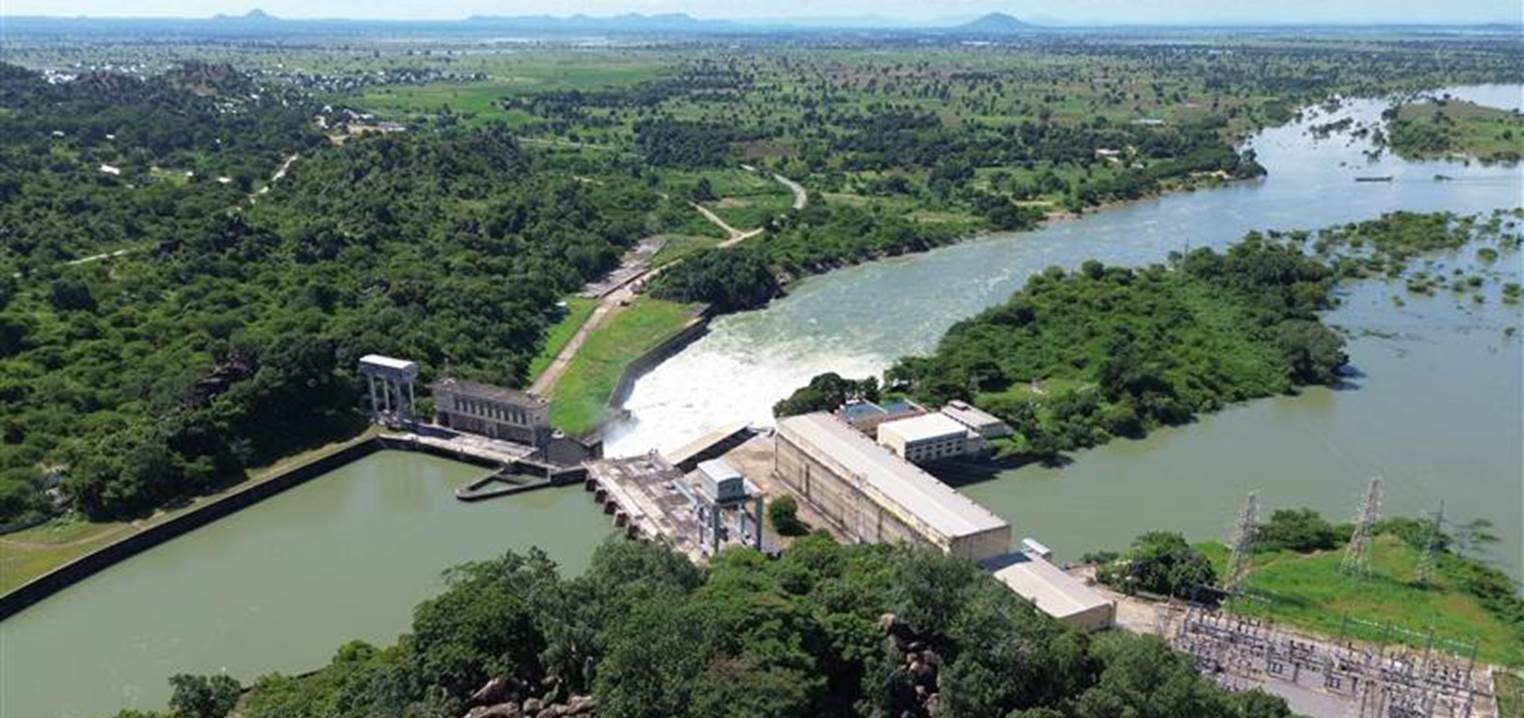
The key challenge faced by the North Interconnected Grid (NIG) is the limited capacity (caused by the falling water level: the changing water flows affect power generation) of the Lagdo Hydro-electrical Power Plant to meet the growing demand for power.
The recent thermal (increased from 4 MW in 2016 to 72 MW in 2025) and solar (30 MW) power generation projects, which, alongside Lagdo that is the linchpin of the NIG energy mix, now make it possible to mitigate, without completing eliminating, the impact of low water levels on customers (without these efforts, the effects would be keener).
A recent press visit to production facilities provided an opportunity to take stock of the supply/ demand balance in the Northern Region.
Key points:
1. Dependence on Lagdo : The Lagdo Power Plant is the major source of power generation in the NIG. However, its generation capacity is hinged on a single reservoir that fills depending on climate and environmental factors.
2. Saturation in 2015 : Until 2015, Lagdo was able to meet the power demand of the NIG. However, as the growing demand was met with power generated by Eneo, even in instances where the reservoir was filled optimally, the power plant could no longer meet all the needs.
3. Capacity Building Plan: Faced with the saturation, a plan to build the capacity and diversify the energy mix was designed in 2016, with progressive implementation backed by the Government.
We can cite the recent thermal (increased from 4 MW in 2016 to 72 MW in 2025) and solar (30 MW) power generation projects, which, alongside Lagdo that is the linchpin of the NIG energy mix, now make it possible to mitigate, without completing eliminating, the impact of low water levels on customers (without these efforts, the effects would be keener).
4. Deficit : In its current state, the capacity building plan is not yet able to meet the entire demand of the NIG, especially during the dry season when climate variations reduce the power generated by Lagdo, which is still the pillar of the NIG energy mix. Faced with this generation deficit at Lagdo, Eneo mobilises all its new thermal (despite the company’s significant cash constraints) and solar power plants in the NIG.
However, this is not enough to meet the deficit. This situation causes more or less significant disruptions to individual and industrial customers.
5. Outlook
- Key projects include expansion of solar initiatives (Eneo, by 2026), and continued investments to modernise and strengthen the reliability of Lagdo, in a bid to safeguard its social contribution in the NIG, while waiting for structuring projects to come to fruition.
- Structuring projects (spearheaded by the Government) such as the Bini a Warack Hybrid Power Plant and interconnection of the South Interconnected Grid with the North Interconnected Grid have been planned.
Additional Information
1. History of the NIG Installed Capacity
The installed capacity increased from 76 MW in 2015 to about 173 MW in 2025, through the addition of new thermal and solar power plants, representing progress of 127.63% in ten years.
2. Installed Capacities of the NIG
Lagdo Power Plant: The installed load has been constant at 72 MW each year since 2015.
Other electricity power plants:
- Djamboutou : 20 MW in 2016, increased to 32 MW in 2021, reduced since to 24 MW in 2024.
- Maroua 1 : 10 MW since 2017, reduced to 8 MW in 2024.
- Ngaoundere : 12 MW since 2021.
- Kousseri : 4 MW in 2015, reduced to 3 MW in 2021.
- Maroua 2 : Integrated in 2024 with 10 MW.
- Kousseri 2 : Integrated in 2024 with 5 MW.
- Guider : 10 MW since 2022.
- 8. Maroua SOLAR 1 and Guider SOLAR 1 : Two photovoltaic parks integrated in 2023 with 15 MW each
3. Composition of the Electricity Network :
- The NIG is made up of 9 interconnected power plants (1 hydro-electricity, 6 thermal, 2 solar), 4 isolated power plants as well as a vast transmission and distribution network.
- The network delivers power to 247, 773 low-voltage customers and 248 medium-voltage customers (as compared to 135, 947 and 194 respectively in 2015). As such, over the 2015-2025 period, the number of low-voltage customers increased by 82.26%, while the number of medium-voltage customers increased by 27.84%.
4. Presentation of the Lagdo Dam:
- Built on River Benoue, it has multiple objectives : power generation, irrigation, flood control, navigation and tourism. One notices, first hand, that all these activities are affected by hydrological risks, amplified by climate change.
- The historical stages include its construction (1978-1984), its inauguration (1986) and drastic/major water-related events.


